
Zinc-Induced Copper Deficiency: Symptoms, Mechanisms, and Recovery
March 29, 2026 · Supplementopedia
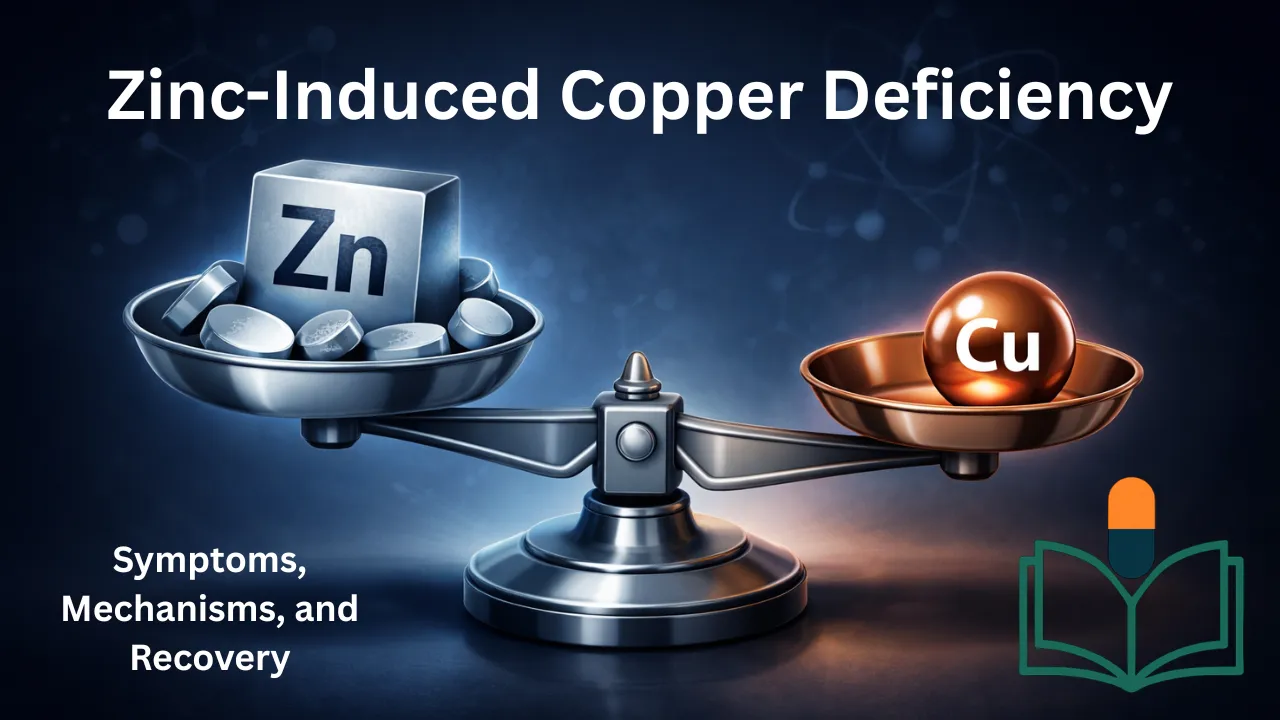
This article is for general educational purposes only. It is not medical advice and should not replace consultation with a qualified healthcare provider. If you have symptoms or concerns about your supplement use, speak with a doctor or registered dietitian before making changes.
Taking zinc daily can quietly cause a copper deficiency that mimics anemia, nerve damage, and premature aging — and most people don’t realize it until months later.
Zinc is one of the most popular supplements in existence — it supports testosterone, immunity, skin, and wound healing. The problem is that high-dose zinc, taken consistently without copper, is one of the most reliable ways to quietly drain your copper stores. And most zinc supplements don't warn you about it.
The irony is that copper deficiency caused by zinc looks a lot like zinc deficiency. You feel run down, your hair changes, your joints ache. Many people respond by taking more zinc.
Why Zinc Depletes Copper
The mechanism is documented and well understood. Zinc and copper share the same intestinal transport system. The ZnT and ZIP family of transporters compete for uptake in the gut — when zinc is present in high concentrations, it triggers the production of metallothionein, a binding protein with an extremely high affinity for copper. Copper gets sequestered in intestinal cells and excreted rather than absorbed into circulation.
A 2024 review in Clinical and Experimental Medicine states this directly: "Excessive zinc intake can inhibit the absorption of copper and iron, leading to copper deficiency and anaemia." A 2009 review in American Family Physician lists copper deficiency as a documented adverse effect of long-term high-dose zinc alongside suppressed immunity, anemia, and decreased HDL cholesterol.
The first documented clinical case appeared in a 1988 Gastroenterology paper: a patient who had taken excessive oral zinc for 10 months developed hypochromic-microcytic anemia, leukopenia, and neutropenia. The anemia didn't respond to iron treatment — it was only resolved after stopping zinc and administering intravenous copper. The authors noted that intestinal copper absorption remained blocked until zinc was fully cleared.
This doesn't require extreme doses. Reports of copper deficiency symptoms appear at 25mg of supplemental zinc taken daily — a dose found in many standard zinc supplements and ZMA blends. At 50mg daily, the risk compounds significantly over months.
Chelated zinc forms — particularly zinc bisglycinate — may reduce the competition somewhat, since the glycine transport pathway is partially separate. But this doesn't eliminate the risk at sustained doses over time.
What Copper Deficiency Actually Feels Like
The symptoms are wide-ranging and easy to misattribute:
Grey or white hair. Copper is a cofactor for tyrosinase, the enzyme responsible for melanin production. When copper drops, melanin synthesis slows and hair loses pigment. This is one of the most commonly reported symptoms in people who have been on high-dose zinc for months or years — particularly with ZMA blends taken nightly.
Fatigue and low energy. Copper is essential for mitochondrial function via cytochrome c oxidase. Deficiency impairs cellular energy production in a way that doesn't respond to sleep.
Neurological symptoms. Numbness, tingling, or weakness in the limbs — sometimes described as a pins-and-needles sensation that doesn't resolve. In severe cases, copper deficiency can clinically resemble B12 deficiency. It has been misdiagnosed as myelodysplastic syndrome.
Joint and nerve pain. Chronic aching in joints and nerve pain through the body, sometimes including esophageal discomfort when swallowing.
Immune dysfunction. Recurrent infections despite taking zinc — the very thing you were supplementing for immunity.
Anemia. Copper is required for iron metabolism. Deficiency causes a hypochromic, microcytic anemia that doesn't respond to iron supplementation — as demonstrated in the 1988 case report.
Brain fog and low mood. Fatigue plus impaired neurotransmitter synthesis creates cognitive slowdown and depression-like symptoms that can persist for months.
The timeline is what makes this insidious. Symptoms typically don't appear for 3–6 months of consistent supplementation, by which point the connection to zinc is rarely obvious.
Cardiovascular Implications
It's not just symptoms you notice day-to-day. A 2024 meta-analysis in ESC Heart Failure found that heart failure patients have significantly lower serum zinc and higher copper concentrations compared to healthy controls — suggesting that zinc-copper imbalance has cardiovascular relevance beyond fatigue and hair changes. The authors cautioned that zinc supplementation in heart failure patients should be approached carefully given the copper depletion risk.
Standard Blood Tests Often Miss It
Serum copper is not a reliable marker for copper status. The body maintains serum copper through compensatory mechanisms even as tissue stores deplete. A more accurate assessment looks at ceruloplasmin (the copper-carrying protein) and serum copper together. Elevated free copper with low ceruloplasmin suggests deficiency despite normal-looking serum numbers.
One commenter on Reddit — identifying as a physician — noted seeing a patient initially suspected of having myelodysplastic syndrome who turned out to have copper deficiency from a prior stomach surgery. "Bloodwork isn't going to properly tell you if you have a copper deficiency. A bone marrow biopsy would." Bone marrow biopsy is the gold standard but rarely needed outside clinical settings.
If you've been taking high-dose zinc for several months and have matching symptoms, speak with a healthcare provider. They can help interpret ceruloplasmin and serum copper results in context and guide next steps.
The Zinc-to-Copper Ratio: What the Research Describes
This section describes general information from published research and common practice. It is not a dosing recommendation. Talk to a healthcare provider before changing your supplement routine.
The commonly cited ratio in the literature is 15:1 zinc to copper by milligrams — for example, 2mg copper alongside 30mg zinc, or 3mg copper alongside 50mg zinc. This is a rough reference point, not a fixed rule. Individual needs vary based on diet, zinc form, timing relative to meals, and baseline copper status.
Timing is frequently discussed in the context of absorption competition. Because zinc and copper share intestinal transporters, many practitioners suggest spacing them by at least 2–4 hours. Some people take copper in the morning with food and zinc in the evening. Whether this approach is appropriate for any individual depends on their specific situation and is worth discussing with a doctor or registered dietitian.
Dietary copper can cover part of the gap if your diet is adequate. Liver, oysters, shellfish, dark chocolate, pumpkin seeds, and cashews are high in copper. Pumpkin seeds are a common recommendation — heat doesn't degrade copper (it's an element, not a molecule), though phytates in raw seeds can inhibit absorption. Roasting or soaking addresses this.
Note on copper IUDs. Copper IUDs do not meaningfully raise systemic copper through absorption, but years of use can in some people contribute to elevated free copper. If you have an IUD and are showing unusual symptoms, get ceruloplasmin checked alongside serum copper.
How Recovery Is Typically Described
If you suspect copper deficiency, consult a healthcare provider before making changes. The information below reflects general patterns reported in the literature — it is not a treatment plan.
Case reports and clinical reviews suggest that when zinc-induced copper deficiency is caught before significant neurological involvement, many patients recover within weeks of correcting the imbalance — though timelines vary by individual and severity. Recovery typically involves reducing zinc intake, addressing copper status under medical supervision, and increasing dietary sources of copper.
Grey hair from copper deficiency can partially reverse in some cases once levels restore, though this is not guaranteed.
For any established neurological symptoms — numbness, weakness, or persistent nerve pain — medical evaluation is important. These cases take longer to resolve and require proper diagnosis to rule out other causes.
What the Research Says About Long-Term Zinc Intake
The tolerable upper intake level (UL) for zinc set by the National Institutes of Health is 40mg/day for adults — but that figure covers total intake including food. Most adults consume 8–12mg from diet, which means the margin for supplemental zinc before reaching the UL is smaller than many labels imply.
The medical literature consistently links higher supplemental doses — particularly 25mg and above taken daily over months — with copper depletion risk. 50mg zinc is documented as a therapeutic dose in specific clinical contexts, not a standard maintenance level.
These figures come from published reference ranges and are provided here for general educational context. What's appropriate for any individual depends on their diet, health status, existing nutrient levels, and guidance from a healthcare provider. If you're taking zinc regularly and want to understand your personal risk, a conversation with your doctor or a registered dietitian is the right starting point.
The Labeling Problem
There is no regulatory requirement in the US or most markets to include copper depletion warnings on zinc supplements. Products selling 50mg zinc — without copper — typically make no mention of the interaction. This is how someone can follow label instructions correctly for months and end up clinically deficient in a nutrient they weren't thinking about.
During the COVID-19 period, many people followed advice to take high-dose zinc for immune support and later traced a cluster of fatigue, greying, and neurological symptoms to zinc-induced copper depletion. The mechanism isn't obscure — it appears in family medicine reviews and clinical case reports going back to 1988. It just doesn't make it onto labels.
If you're recommending zinc to someone, include the copper context. It's not a footnote — it's the most important thing to understand about long-term zinc supplementation.
Related compounds: zinc · copper